Zygomatic & Remote Anchorage Implants · Bonney Lake, WA

For patients told they’re not candidates for dental implants.

When traditional implants aren’t possible due to severe bone loss, remote anchorage protocols, zygomatic implants, pterygoid implants, and the PATZI sequence, restore fixed teeth in patients other practices turn away. Performed personally by oral and maxillofacial surgeon Dr. Jonathan Volland.

95.21%

12-Year Survival

4,556 implants · 68 studies¹

PATZI

Placement Algorithm

Conventional-first sequence

ZAGA

Zygomatic Approach

Anatomy-guided placement

What it is

What happens when there isn’t enough bone.

Traditional dental implants, including the standard All-on-4 protocol, must be anchored in the jawbone itself. When years of denture wear, periodontal disease, or previous tooth loss have resorbed that bone beyond a critical threshold, conventional implants are no longer viable.

01

The old answer: grafting.

Sinus lifts, ridge augmentation, autogenous grafts harvested from the hip or chin, staged over 12 to 18 months before implants could even be placed, with no guarantee the regenerated bone would hold.

02

The result: “not a candidate.”

Patients who couldn’t tolerate the timeline, the additional surgeries, the cost, or the uncertainty were left with conventional dentures, which, given the underlying bone loss, often didn’t fit well either.

03

The new answer: remote anchorage.

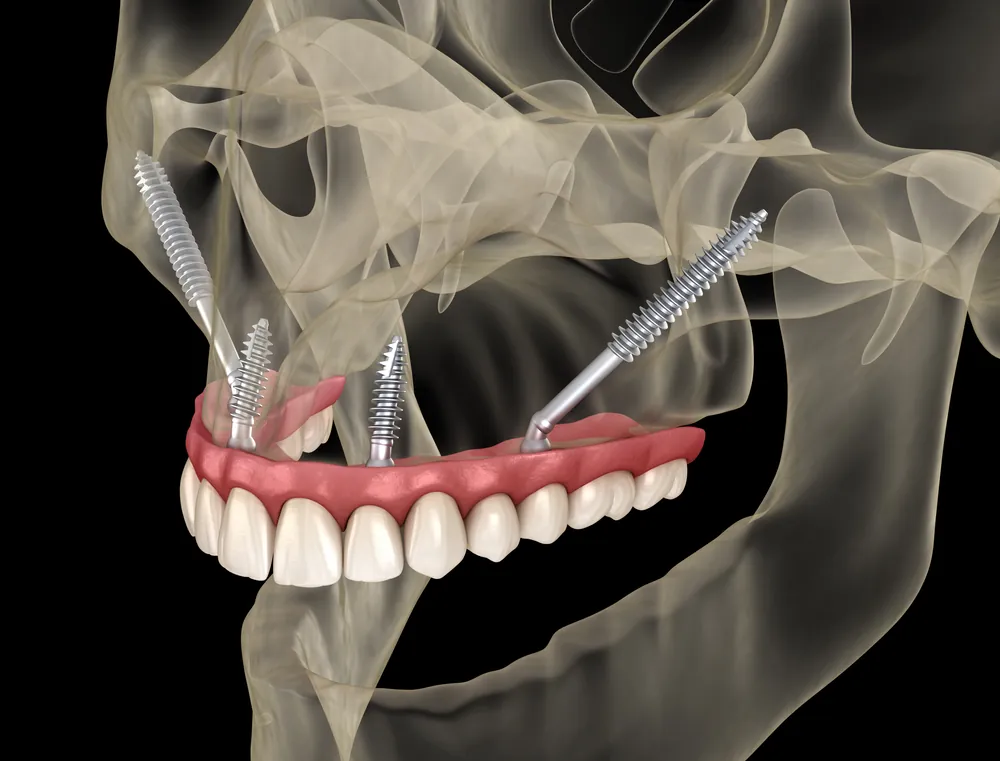
Rather than rebuilding bone that isn’t there, zygomatic and pterygoid implants anchor in nearby bone that is, supporting a fixed prosthesis without years of grafting and healing. This is not experimental work. Zygomatic implants have been performed since the 1990s, with published 12-year cumulative survival around 95% across thousands of cases.¹ Modern protocols like ZAGA and PATZI provide systematic, evidence-based decision-making rather than improvisation.

The anchorage sites

Where remote anchorage implants are placed.

The maxillofacial skeleton contains several regions of dense bone that can support implants when the maxilla itself cannot. Each has specific clinical applications.

01

Most common

Zygomatic Implants

Zygomatic Implants

Anchored in the zygomatic bone (cheekbone). Used in pairs to support the posterior portion of a full-arch prosthesis, often combined with conventional anterior implants.

Length

30–55 mm

Anatomy used

Zygomatic process into the body of the zygoma

Placement path

Intrasinus (original) or extrasinus (ZAGA)

Loading

Immediate, when primary stability achieved

12-year survival

~95% cumulative¹

02

Posterior Anchorage

Pterygoid Implants

Anchored in the pterygoid plate at the back of the upper jaw. Often paired with anterior conventional implants in the PATZI protocol, effective when posterior maxillary bone is atrophic but pterygoid density is preserved.

Length

15–24 mm

Anatomy used

Pterygomaxillary complex, dense bone

Placement path

~70° angled through tuberosity

Loading

Immediate, with >40 Ncm insertion torque

Survival

High in published immediate-load studies³

03

Specialized Use

Trans-Nasal Implants

Anchored through the nasal floor. Reserved for severely atrophic anterior maxillae where conventional anterior and zygomatic placement are both inadequate.

Anatomy used

Nasal floor and nasal process of the maxilla

When used

Severely atrophic anterior maxilla

Frequency

Less common, most severe cases only

04

Foundation Layer

Anterior & Tilted Conventional

Standard implants in the front of the maxilla, sometimes tilted, placed first in the PATZI algorithm whenever bone allows, before escalating to remote anchorage.

Length

8–18 mm, conventional range

Why included

Anterior bone is often preserved even in atrophic patients

Position in PATZI

Second priority, after pterygoid

Who we see

Who arrives at our consultation room.

The patient seeking remote anchorage care has typically already done significant research. Three profiles are particularly common.

Profile A

The “not a candidate” patient.

Told by one or more practices they aren’t candidates for full-arch implants, usually after long-term denture wear with significant bone resorption. Often arrives discouraged. Most patients in this category are, in fact, candidates with remote anchorage. Profile B

The previous-implant-failure patient.

Had implants placed elsewhere that failed, with bone loss at the original sites complicating re-placement. Wants a second opinion from someone with broader surgical scope. Profile C

The “no grafting” patient.

Quoted full-arch implants only after 12+ months of staged grafting. Can’t tolerate the timeline, cost, or additional surgical exposure, and wants to know if a faster path to fixed teeth exists.

Candidacy

You may be a candidate, even if you’ve been told you aren’t.

Patients with severe upper-jaw bone loss are often dismissed as “not candidates” for full-arch implants by general dentists and even some specialists. Remote anchorage protocols change that calculation.

Common reasons patients reach this page

Long-term denture wearer with significant bone resorption

Previous implant failure with bone loss at the original sites

Told you “need extensive bone grafting” before any implants

Severe maxillary atrophy after years of tooth loss

Want to avoid 12+ months of grafting, healing, then implants

The protocol

The algorithm for severely atrophic maxillae.

PATZI, published in the International Journal of Oral and Maxillofacial Implants in 2023⁵, is a systematic intraoperative decision-making algorithm for full-arch maxillary reconstruction: prioritize traditional implants, escalate to remote anchorage only when needed.

01

P

Pterygoid

Pterygoid implants are placed first in the PATZI sequence. The posterior anchorage they provide eliminates the cantilever forces that compromise traditional posterior placement in atrophic maxillae. If pterygoid placement achieves adequate primary stability, the posterior support of the prosthesis is established without requiring zygomatic implants.

02

A

Anterior

Standard implants are placed in the front of the upper jaw, where bone density is typically preserved even in atrophic patients. Anterior placement uses available native bone rather than escalating to remote anchorage prematurely. The PATZI algorithm specifically prioritizes traditional implants when they are anatomically viable.

03

T

Tilted

Tilted implants, placed at angles up to 30°-45°, extend the posterior reach of conventional placement, similar to the All-on-4 angled posterior approach. This is the third escalation step when straight anterior placement and pterygoid anchorage haven't fully addressed the prosthetic plan.

04

Z

Zygomatic

Zygomatic

Zygomatic implants are added when the previous steps haven't established adequate prosthetic support. The PATZI sequence treats zygomatics as the highest-escalation option rather than the default, a meaningful philosophical contrast to "zygomatic-first" approaches that some specialty practices use. The result: zygomatic implants are placed when truly required, not as a marketing feature.

05

I

Implants

The completed configuration, whichever subset of the four placement types provides adequate support for one fixed prosthesis. Determined intraoperatively, case by case.

Conventional implants are technically simpler, faster to place, less expensive, and have a longer track record than zygomatic implants. A protocol that systematically prefers conventional placement when viable, and escalates to remote anchorage only when genuinely needed, produces, on average, better outcomes than one that defaults to zygomatics.

Technique

Zygomatic placement, guided by your anatomy.

When zygomatic implants are required, the surgical placement technique matters significantly. The Zygomatic Anatomy-Guided Approach (ZAGA), developed by Dr. Carlos Aparicio, has become the modern standard.²

Original Technique

Intrasinus placement • Brånemark, 1990s
Sinusitis
9.3%
Soft tissue contamination
7.5%
Oroantral fistula
4.6%
Approach

Requires opening a window into the maxillary sinus and elevating the membrane, effective, but with higher complication rates.

ZAGA Approach

Anatomy-guided • Aparicio
Sinusitis
4.4%
Soft tissue contamination
4.3%
Oroantral fistula
0.6%
Approach

Comparable long-term implant survival to the original technique, with significantly lower complication rates.

At Elite Oral Surgery, zygomatic placement follows the ZAGA framework, anatomy-specific surgical planning from 3D imaging, confirmed intraoperatively, under in-house IV sedation or general anesthesia.

Expected outcomes

What the peer-reviewed research shows.

Zygomatic implants have been studied longitudinally for over two decades. The modern systematic reviews aggregate data from thousands of implants across dozens of studies.

95.21%

Cumulative survival

12 years

96.2%

Mean survival

6 years

98.1%

Immediate-Load Survival⁴

94%

Mean Prosthesis Survival⁴

The most comprehensive systematic review, 68 studies, 4,556 implants, 2,161 patients, reports a 12-year cumulative survival rate of 95.21%. These rates are comparable to conventional dental implants. The most frequent complication is sinusitis, around 14% at five years, generally manageable with appropriate surgical technique and monitoring. Pterygoid implants show similarly favorable outcomes, 100% survival reported in one immediate-load study, with larger datasets continuing to support high survival when proper insertion torque is achieved.

Patient Reviews

Trusted By Patients. Rated 5.0 On Google.

5.0
Based on 34 Google reviews
“I really appreciated how attentive and detailed Dr. Volland and his team were when answering questions and sharing what the experience would be like when getting my wisdom teeth removed. I felt very at ease during and after the procedure because of their reassurance despite being uneasy initially.”
JJaylan Barr a month ago · Google
“Dr. Volland is amazing! Had a great journey getting my wisdom teeth removed and a bone graft done. All the staff are super nice and make you feel at home. Recovery was quick, and I could tell I was in expert hands.”
SSergey Kunitsa 2 months ago · Google
“I was very nervous going into the procedure. Dr. Volland was absolutely amazing. He was kind, reassuring, and took the time to make me feel comfortable every step of the way. The procedure was quick, smooth, and much easier than I expected.”
JJennifer Stukova 2 months ago · Google
“I cannot say enough about Dr. Volland. He is so thorough and caring. He truly listens to patients, making every visit feel special. Got my all-on-x treatment done, and the results are amazing!”
MMelissa DeArmitt 2 months ago · Google
“The calm atmosphere and confidence of the dr and assistant was reassuring. The extraction was painless and they were attentive to me throughout the procedure. They made the entire experience as comfortable as possible.”
HHeather a month ago · Google
“Dr. Volland was super professional during my consult. Definitely recommend him for anyone in the Sumner area looking for dental implants. Talked through everything in detail. He truly knows his stuff!”
SSang H 3 months ago · Google
“Dr. Volland did an amazing job! The procedure was quick, completely painless, and I was in and out in no time. My recovery was also very fast and pain-free. Highly recommend!”
VVioletta Kondratyev 2 months ago · Google
“Dr. Volland is as professional as he is kind. His extractions are quick and easy, implants are successful and look great, and IV sedation makes the whole process go off without a hitch.”
KKM Morehouse 6 months ago · Google
“Dr. Volland was so gentle and made sure I was comfortable during my implant surgery. He's the only Dr I'll trust with my oral surgery needs!”
MMelanie Johnston 6 months ago · Google
“I went in for a dental implant under sedation and it was absolutely painless! It was so easy and smooth. I can't thank him enough!”
JJeff Chapman 6 months ago · Google
“Our family had an excellent experience with Dr. Volland and his team. Dr. Volland personally took a call from me when we got home and answered my questions. His commitment to patient care is outstanding.”
BBenjamin Roberts a year ago · Google

Risks

The complication profile, honestly disclosed.

Remote anchorage protocols, particularly zygomatic implants, carry a meaningfully higher complication risk profile than conventional implants. Intelligent decision-making requires understanding what those risks are.

01Maxillary sinusitis
~14% at 5 yrs

ZAGA-based placement planning, pre-op sinus evaluation, post-op monitoring, prompt management of symptoms.

02Implant failure
~5% over 12 yrs

Confirmed high primary stability (>40 Ncm), careful 3D-guided trajectory planning, zygomatic-specific post-op protocols.

03Soft tissue complications
4–8%

Anatomy-guided emergence point selection, hygiene instruction specific to zygomatic implants, regular follow-up.

04Paresthesia (altered sensation)
~4–10%

Pre-surgical 3D imaging to identify nerve location; technique that maintains safety margins from neurovascular structures.

05Oroantral communication
<5%

ZAGA-based extrasinus placement when appropriate, careful sinus membrane management, post-op imaging when warranted.

06Surgical & anesthesia risk
Scales with ASA class

Comprehensive pre-op medical clearance, hospital-trained anesthesia administration, full monitoring, on-site resuscitation protocols.

All risks are reviewed at consultation and again as part of formal informed consent before surgery is scheduled.

Pricing

How remote anchorage cases are priced.

Remote anchorage cases are quoted individually at consultation rather than priced from the standard $15,000 per-arch structure used for All-on-4 and All-on-6. Surgical complexity, implant count, and configuration vary substantially case by case.

Typical Range

$25,000–$60,000+

01

Typical Washington State range · per arch, by configuration

Written quote at consultation.

Every patient receives an itemized written treatment plan before any surgical date is scheduled, covering implant configuration, surgical fee, anesthesia, prosthetic fabrication, and follow-up care.

02

The quote is final.

If intraoperative findings require a meaningfully different approach, we stop and discuss before proceeding. There is never a change in price after surgery is underway.

03

Financing options apply.

All five financing partners are available. HSA/FSA eligible. Most patients spread the cost across 60–84 months.

Common Questions

Answers, before you ask.

Probably yes. Most patients told they aren't candidates were assessed against criteria for conventional or All-on-4 implants, both of which require adequate bone in the maxilla itself. Zygomatic and pterygoid implants change that calculation by anchoring in different bone. The honest answer comes from 3D Cone Beam CT imaging at consultation, not any prior verbal assessment.

Different anchorage sites in different bone. Zygomatic implants (30–55mm) anchor in the cheekbone, providing posterior support when the upper jaw lacks bone for conventional posterior implants. Pterygoid implants (15–24mm) anchor in the dense pterygoid plate at the back of the upper jaw. The two are often used together, the PATZI protocol determines which combination is right for each case.

The surgery is more involved, longer surgical time (typically 3.5+ hours), a larger surgical field, and typically general anesthesia or deep IV sedation. Recovery is somewhat more complex, but most patients report it’s meaningfully easier than the alternative: extensive bone grafting followed by 6–12 months of healing, then a separate implant surgery.

The largest published systematic review reports a 12-year cumulative survival rate of approximately 95%, comparable to conventional implants. Most failures occur within the first six months. Implants that integrate successfully tend to remain stable long-term with appropriate maintenance.

PATZI: Pterygoid, Anterior, Tilted, Zygomatic Implants, is a systematic algorithm published in 2023 that prioritizes traditional implant placement, escalating to remote anchorage only when conventional approaches are inadequate. It matters because it produces, on average, better outcomes than approaches that default to zygomatics for all atrophic cases.

ZAGA: Zygomatic Anatomy-Guided Approach, was developed by Dr. Carlos Aparicio in 2010. It classifies each patient’s anatomy (ZAGA 0–4) to determine the surgical placement path. Compared to the original technique, ZAGA produces comparable survival with significantly lower complication rates, and is the modern standard of care.

The surgical phase is typically completed in a single visit, with same-day provisional teeth. Final zirconia follows the same 10–12 week timeline as conventional full-arch protocols, meaningfully faster than staged grafting, which commonly extends total treatment to 12–18 months.

Two differences. First, we follow the PATZI algorithm: conventional implants are placed when viable, and remote anchorage is used only when actually needed, rather than defaulting to zygomatics. Second, Elite is independently owned, and Dr. Volland plans, performs, and follows up on every case personally.

Dental insurance typically provides limited coverage, usually a small portion attributed to extractions or the prosthesis, capped at $1,000–$3,000 lifetime in most plans. Medical insurance occasionally covers a portion when bone loss results from trauma, cancer treatment, or certain congenital conditions. We help document exactly what your plan covers.

Opening January 2027

Schedule Your Consultation.

Leave your details and we'll reach out as soon as consultations are available. No obligation, no marketing. Just a note when the door opens.

  • Complimentary full-arch consultations
  • No referral required for implant cases
  • Dr. Volland follows up personally

9907 205th Ave E · Bonney Lake, WA 98391

(206) 738-2503

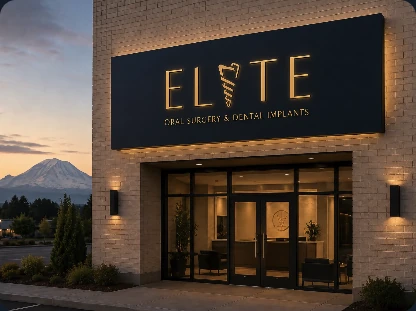
Elite Oral Surgery office entrance
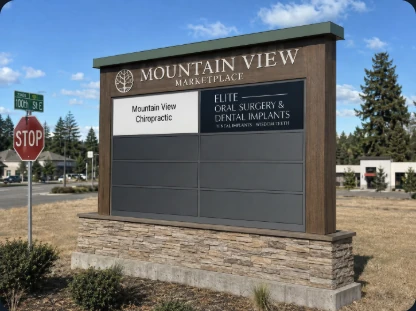
Mountain View Marketplace sign for Elite Oral Surgery
Elite Oral Surgery reception with gold monogram

Privacy Policy · Terms of Service

Call NowSchedule Consultation