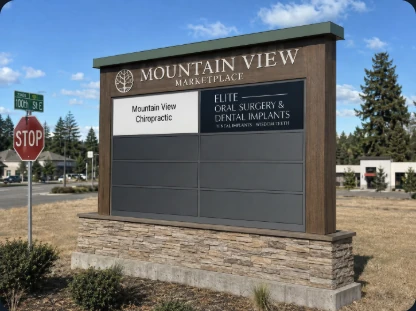

Surgical Tooth Extractions · Bonney Lake, WA
When your tooth needs more than a routine extraction.
Broken at the gum line, curved or fractured roots, fused to the bone, or surrounded by dense bone, some teeth require surgical extraction by an oral surgeon. If your dentist referred you, here’s what that means. Performed under IV sedation by Dr. Jonathan Volland.
At a glance
The procedure, the timeline, and the practical details.
What most patients want to know before they read any further.
Procedure Time
30–90 min
Varies with complexity
A referral from your general dentist is requested for surgical extractions. Urgent cases involving severe pain or active infection are typically accommodated same-day or next-day. If you don’t currently have a general dentist, contact our office and we can discuss your options.
Simple vs. surgical
The difference your dentist was actually describing.
“Simple” and “surgical” describe the technique used to remove the tooth, not how the procedure feels for the patient. Both are performed under appropriate anesthesia and are routine procedures for trained providers. The difference is the method required to remove the tooth safely from the surrounding bone and tissue.
Simple Extraction
- Forceps and gentle elevation
- Tooth is fully erupted and visible
- Root structure is relatively straight
- No bone removal needed for access
- Local anesthesia typically sufficient
- Quick procedure, 10–20 minutes typical
- Our Office
Surgical Extraction
- More than forceps and elevation
- Tooth is broken, fractured, or below the gum line
- Root structure is curved, fused, or hooked
- Dense surrounding bone requires modification
- IV sedation standard for patient comfort
- Longer procedure, 30–60 minutes typical
- Bone graft typically placed at the same time
When a referral happens
Six clinical situations that mean your dentist will refer.
If any of these apply to your tooth, simple extraction is unlikely to succeed and your general dentist will typically refer you to an oral and maxillofacial surgeon.
Broken at or below the gum line.
When there’s no longer enough tooth structure above the gum to grasp with forceps, surgical access is required to expose the remaining tooth and root, often a small incision and minimal bone removal.
Curved, hooked, or fused roots.
Severely curved roots, hooked tips, or roots fused to bone (ankylosis) can’t be removed with simple forceps. Surgical extraction allows controlled sectioning and individual root removal without fracturing surrounding bone.
Retained roots from a prior extraction.
A tooth can fracture during simple extraction, leaving root tips in the bone. These may need surgical removal if they cause infection, interfere with implant placement, or create other clinical problems.
Dense bone surrounding the tooth.
Lower posterior teeth and very dense jawbone can require surgical access and minimal bone removal even when the tooth looks straightforward. Forcing simple extraction in dense bone risks tooth fracture.
Patients who need IV sedation.
For anxious patients, multiple extractions at once, medical conditions requiring sedation management, or those who simply prefer to be asleep, an oral surgeon’s office provides a controlled sedation environment general offices typically can’t.
Concurrent grafting, implants, or multiples.
When extraction is combined with bone grafting, immediate implant placement, or several teeth in one visit, the case is managed surgically. Combining procedures under one sedation reduces total surgical exposure.
What to expect
The procedure, plainly explained.
Surgical extractions here are performed under IV sedation as the standard. You’ll be asleep, and the procedure typically takes 30–60 minutes depending on complexity. Most patients are surprised by how routine the experience feels. Sedation helps reduce the anxiety many people associate with the words “surgical extraction.”
Anesthesia & timing
IV sedation administered by Dr. Volland in our office, WA General Anesthesia Permit-authorized; ACLS, PALS, ATLS, and BLS-certified. You’ll be asleep and won’t remember the procedure. You’ll need a driver to take you home and stay with you for several hours.
The procedure
After sedation, the area is locally anesthetized. The tooth is accessed through whatever the case requires, a gum incision, minimal bone removal, sectioning the tooth into pieces, or specialized instruments for retained or ankylosed roots.
Bone grafting at extraction
Bone grafting is typically placed at the same time as the extraction if you have natural teeth on either side of the site, protecting the bone that supports those neighboring teeth. Performed under the same anesthesia, in the same appointment.
Post-operative care
Pain managed with prescribed and over-the-counter medications. Ice packs for the first 24–48 hours. Gentle warm salt-water rinses after the first day. Avoid vigorous activity for 2–3 days. Most patients describe recovery as easier than expected.
Recovery
What recovery actually looks like.
Honest expectations for the days after surgery. Avoid spitting, smoking, and using straws for 5–7 days to prevent dry socket and protect any graft material.
First 24-48 hours
Rest, ice, and protect the site.
Drowsy for a few hours after sedation. Ice packs reduce swelling. No spitting, smoking, or straws, these dislodge the clot and risk dry socket. Soft, cool foods only, and take pain medication on schedule.
Days 3–5
Swelling eases, activity returns.
Mild to moderate swelling and tenderness settle over 3–5 days. Most patients return to normal activities within 2–3 days, the day after surgery for many, unless work involves heavy exertion. Begin gentle salt-water rinses.
Soft-food diet the first week, then normal eating as healing continues.

First week
Soft-food healing.
A soft-food diet for the first week protects the extraction site and any graft. Discomfort is typically manageable with over-the-counter analgesics as the tissue closes.
A short visit, no sedation, bite and fit are confirmed before the final is made.

Weeks 1–2
Sutures dissolve, follow-up confirms healing.
Sutures, if used, dissolve over 7–14 days. A follow-up appointment at one week verifies healing. Gum tissue closes over 2–3 weeks; complete bone healing of the socket takes several months.
Your permanent teeth. The provisional comes off; the final goes in.

Authoritative reference
AAOMS patient information: simple vs. surgical extraction
Patient education on the distinction between simple and surgical tooth extraction, when each is appropriate, and what to expect, from the American Association of Oral and Maxillofacial Surgeons.
Cost & insurance
What it costs, and what’s typically covered.
Surgical extraction cost varies with case complexity. We verify your specific coverage before treatment and provide a written estimate of patient responsibility.
Typical fee
$300–$600
Per tooth · Routine surgical extraction
Complex cases (deep impaction, ankylosis, multi-rooted teeth requiring sectioning) can range higher
Bone grafting is priced separately when placed
IV sedation is priced separately from the extraction
Multi-tooth and combined cases quoted in writing before treatment
Insurance & financing
Coverage is generally good
Most dental plans cover surgical extractions as basic or major services at 50–80%. IV sedation coverage varies, some plans cover it as medically necessary alongside surgery, others classify it as elective.
HSA and FSA funds are eligible
Financing available through our partner network for larger cases
Written estimate of patient responsibility before treatment
Local anesthesia available if sedation isn’t covered and you prefer not to pay out of pocket
Patient Reviews
Trusted By Patients. Rated 5.0 On Google.
“I really appreciated how attentive and detailed Dr. Volland and his team were when answering questions and sharing what the experience would be like when getting my wisdom teeth removed. I felt very at ease during and after the procedure because of their reassurance despite being uneasy initially.”
“Dr. Volland is amazing! Had a great journey getting my wisdom teeth removed and a bone graft done. All the staff are super nice and make you feel at home. Recovery was quick, and I could tell I was in expert hands.”
“I was very nervous going into the procedure. Dr. Volland was absolutely amazing. He was kind, reassuring, and took the time to make me feel comfortable every step of the way. The procedure was quick, smooth, and much easier than I expected.”
“I cannot say enough about Dr. Volland. He is so thorough and caring. He truly listens to patients, making every visit feel special. Got my all-on-x treatment done, and the results are amazing!”
“The calm atmosphere and confidence of the dr and assistant was reassuring. The extraction was painless and they were attentive to me throughout the procedure. They made the entire experience as comfortable as possible.”
“Dr. Volland was super professional during my consult. Definitely recommend him for anyone in the Sumner area looking for dental implants. Talked through everything in detail. He truly knows his stuff!”
“Dr. Volland did an amazing job! The procedure was quick, completely painless, and I was in and out in no time. My recovery was also very fast and pain-free. Highly recommend!”
“Dr. Volland is as professional as he is kind. His extractions are quick and easy, implants are successful and look great, and IV sedation makes the whole process go off without a hitch.”
“Dr. Volland was so gentle and made sure I was comfortable during my implant surgery. He's the only Dr I'll trust with my oral surgery needs!”
“I went in for a dental implant under sedation and it was absolutely painless! It was so easy and smooth. I can't thank him enough!”
“Our family had an excellent experience with Dr. Volland and his team. Dr. Volland personally took a call from me when we got home and answered my questions. His commitment to patient care is outstanding.”
Opening January 2027
We accept referrals from any general dentist.
Your dentist can send a referral with imaging and a brief clinical note, and our office will contact you to schedule, regardless of location or whether you’ve been referred before. Most surgical extractions can be scheduled within 1–2 weeks; urgent cases involving pain or infection are typically seen same-day or next-day.
Common Questions
Questions worth asking.
IV sedation is standard practice at our office. You’ll be asleep during the procedure and typically won’t remember it afterward. You’ll continue breathing on your own throughout and may feel groggy when you wake up. Most patients describe the experience as much easier than expected. If you prefer to remain awake with local anesthesia, that may be an option when clinically appropriate.
Most patients return to normal activities within 2–3 days, with mild to moderate swelling for 3–5 days and a soft-food diet the first week. Sutures dissolve over 7–14 days; gum tissue fully heals in about 2–3 weeks, and bone healing of the socket takes several months. You can typically work the day after unless your job requires heavy exertion, many patients schedule for a Friday to recover over the weekend.
If you have natural teeth on either side of the site, grafting at the time of extraction protects the bone supporting those neighbors. Without it, bone resorption after extraction extends laterally, leading to exposed roots, deeper periodontal pockets, and a compromised long-term prognosis for those teeth. Most surgical extractions here include socket-preservation grafting during the same procedure, under the same anesthesia.
Multiple-tooth extractions in a single appointment are routine. Removing several teeth in one session under IV sedation reduces total anesthesia exposure, recovery time, and cost compared to staging across visits. For full-arch cases, when all remaining teeth in an arch come out as part of implant therapy, the extractions are typically done at the same surgical visit as implant placement.
Yes. We accept referrals from any general dentist, regardless of location or prior history with our practice. Your dentist sends a referral with imaging and a brief clinical note, and our office will contact you to schedule. Most cases are seen within 1–2 weeks; urgent cases with severe pain or active infection are typically accommodated same-day or next-day. If you don’t have a general dentist, contact our office and we can discuss your options.
Sedation coverage varies. Many plans cover it when documented as medically necessary alongside surgery, typical for surgical extractions, while some classify it as elective. We verify your coverage beforehand and provide a written estimate of any responsibility. If sedation isn’t covered and you’d prefer not to pay out of pocket, local anesthesia is available for routine cases where clinically appropriate, and HSA/FSA funds can be used toward sedation.
Opening January 2027
Schedule Your Consultation.
Leave your details and we'll reach out as soon as consultations are available. No obligation, no marketing. Just a note when the door opens.
- Complimentary full-arch consultations
- No referral required for implant cases
- Dr. Volland follows up personally
9907 205th Ave E · Bonney Lake, WA 98391
(206) 738-2503